
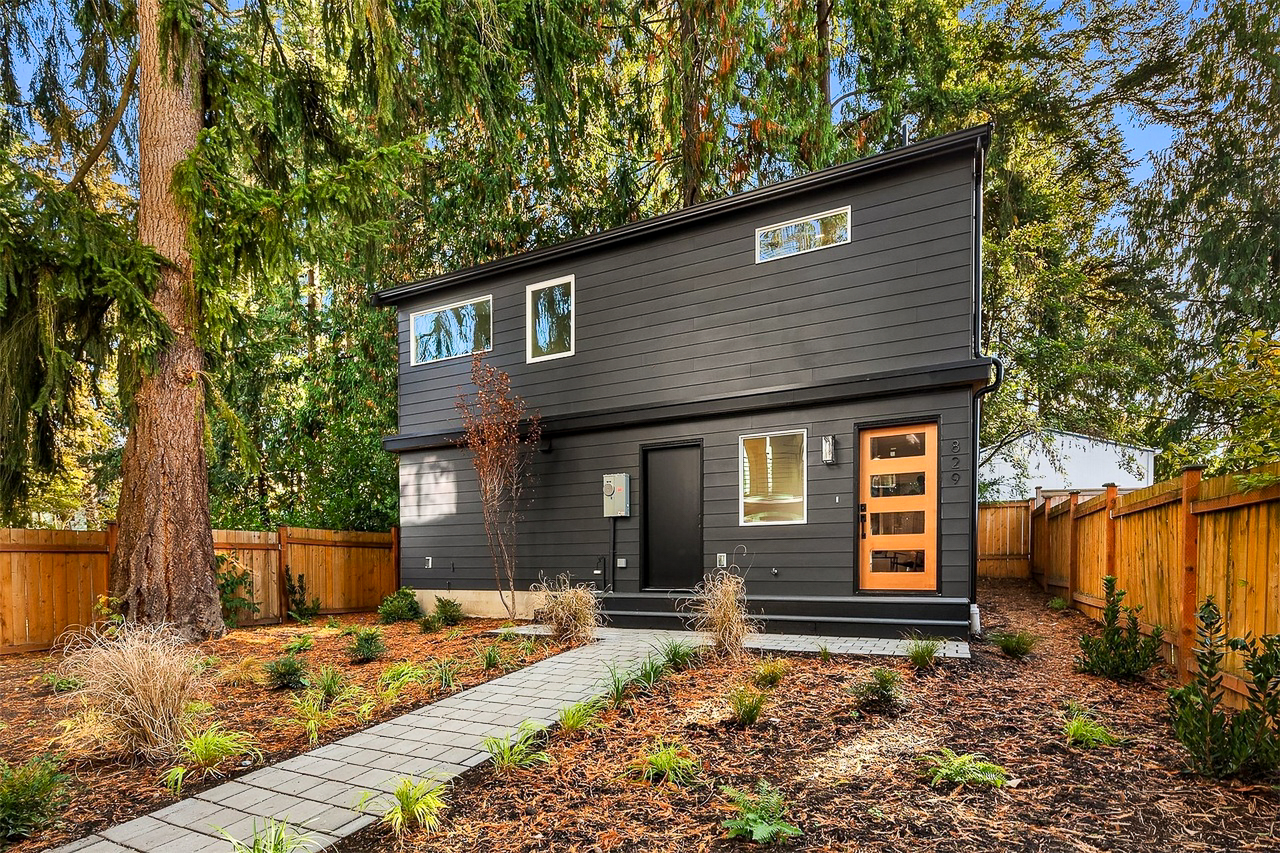
Accessory dwelling units have become an increasingly practical way for homeowners to add usable living space without purchasing another property.
They can serve as guest housing, a private space for parents or adult children, a home office, or a long-term rental. But before planning begins, homeowners often run into an important question:
Should you build an ADU or a DADU?
The two terms are closely related, but the difference between them can significantly affect privacy, construction complexity, cost, access, utilities, and how the space is used over time.
Understanding those differences early can make the planning process much easier.
What Is an ADU?
ADU stands for Accessory Dwelling Unit.
It is a secondary residential living space located on the same property as a primary home.
An ADU normally includes the features needed for independent living, such as:
- a sleeping area,
- a bathroom,
- a kitchen or kitchenette,
- living space,
- a separate or shared entrance.
ADUs can take several forms.
For example, a homeowner might convert part of a basement into a separate apartment, transform an attached garage, or create a new addition connected to the existing home.
Because the unit remains physically connected to the primary residence, this type of project is often referred to as an attached ADU.
What Is a DADU?
DADU stands for Detached Accessory Dwelling Unit.
The basic purpose is similar, but the structure is physically separate from the main home.
A DADU may look like:
- a backyard cottage,
- a detached small house,
- an apartment above a detached garage,
- a newly constructed secondary residence elsewhere on the lot.
The most important difference is independence.
A DADU usually provides a greater sense of separation from the primary residence because occupants do not share the same building.
For homeowners considering either option, working with an experienced ADU construction team can help connect property evaluation, design, construction planning, and the practical requirements of the project.
The Biggest Difference: Connection vs. Separation
The simplest way to understand ADUs and DADUs is to think about how they relate to the primary house.
An attached ADU is part of the existing structure or directly connected to it.
A DADU is its own building.
That difference affects almost every part of the project.
An attached unit may be easier to access from the main house and may share certain existing building systems.
A detached unit can offer greater privacy but may require additional site preparation, utility connections, foundations, exterior construction, and access planning.
Neither approach is automatically better.
The right choice depends on what the homeowner wants the space to accomplish.
Privacy and Everyday Use
Privacy is one of the most important considerations.
An attached ADU can work extremely well for family members who want some independence while remaining close to the main household.
For example, aging parents may appreciate having their own kitchen, bedroom, and bathroom without being physically separated from the rest of the family.
An adult child may benefit from an attached space that provides independence while keeping housing costs manageable.
However, sound transmission, entrances, shared walls, and circulation through the home should be considered carefully.
A DADU usually provides more separation.
That can be valuable when the unit will be occupied by tenants, long-term guests, or family members who want a more independent living arrangement.
The space can function much more like a small standalone home.
ADU vs. DADU for Multigenerational Living
Multigenerational housing is one of the most common reasons homeowners consider accessory dwelling units.
Both ADUs and DADUs can work well, but the household’s needs should guide the decision.
An attached ADU may be preferable when family members need frequent assistance or close interaction.
For example, elderly relatives can remain nearby while still having a private living area.
A detached unit may be a better fit when independence is the priority.
Parents, adult children, or extended family members can have a completely separate home while remaining only a short walk away.
It is also useful to think several years ahead.
A space initially created for a parent could eventually become a guest suite, rental, office, or living space for another family member.
Flexible design can make the investment more useful over time.
Which Option Works Better as a Rental?
Both attached and detached units can potentially serve as rental housing, depending on local rules and property conditions.
From a tenant’s perspective, a DADU may feel more like a traditional independent residence.
A separate entrance, separate building, and additional privacy can be attractive.
An attached ADU can also function well as a rental, especially when the entrance, sound separation, and interior layout have been designed specifically for independent occupancy.
The important point is to think about rental use during the design stage rather than treating it as an afterthought.
Questions to consider include:
- Will the occupants have a private entrance?
- Where will they park?
- How will utilities be handled?
- Is there adequate sound separation?
- Will outdoor areas be shared?
- How will trash and storage be managed?
- How much privacy will both households have?
These practical details can have a major impact on the long-term usability of the unit.
Property Size and Existing Layout Matter
Not every property is equally suited to both options.
A detached unit requires enough usable land for another structure.
The location must also accommodate setbacks, access, utility connections, and other applicable development requirements.
A smaller property may have very limited space for a DADU but could still have an excellent opportunity for an attached ADU.
For example, an underused basement may already contain much of the square footage needed.
An attached garage might also provide an opportunity for conversion.
On a larger lot, a detached backyard structure may be much more practical.
The existing house should therefore be evaluated together with the overall property rather than deciding on a unit type in isolation.
Construction Complexity and Site Work
A DADU is essentially a small new-construction project.
That often means the project may involve:
- excavation,
- foundations,
- framing,
- roofing,
- exterior siding,
- windows and doors,
- electrical service,
- plumbing,
- heating and ventilation,
- insulation,
- interior finishes.
Site access can also influence the project.
If construction equipment and materials must pass through a narrow side yard, the logistics may be more complicated than they appear on a simple floor plan.
An attached ADU may require less new exterior construction, but that does not necessarily make it simple.
Conversions can reveal existing structural, plumbing, electrical, moisture, or insulation issues that must be addressed before the space can become suitable for independent living.
The complexity is different rather than nonexistent.
Utilities Need to Be Planned Early
Utilities can have a major influence on ADU and DADU projects.
A detached structure may require new or extended connections for:
- water,
- sewer,
- electricity,
- communications,
- heating systems.
The location of existing utilities can affect where the unit is practical to build.
For an attached ADU, some systems may be closer and easier to connect, but capacity still needs to be considered.
An existing electrical panel, plumbing system, or heating system may require upgrades.
This is one reason property evaluation should happen before the design becomes too detailed.
A layout that looks perfect may become significantly more expensive if it requires complex utility work.
Access Is More Important Than It Seems
Homeowners often focus on the building itself and give less attention to how people will reach it.
Access matters for both everyday use and privacy.
A DADU may require a walkway from the street or driveway to the backyard.
An attached ADU might need a separate exterior entrance.
Good access planning should consider:
- lighting,
- stairs,
- accessibility,
- gates,
- landscaping,
- weather protection,
- privacy,
- proximity to the primary residence.
For older residents or people with limited mobility, these details can become especially important.
A beautifully designed unit is not truly functional if reaching it is inconvenient or difficult.
Parking Can Influence the Layout
Parking needs vary considerably depending on location and intended use.
Even when additional parking is not required, homeowners should think about how another household will affect the property.
Will the new occupants use the driveway?
Is there adequate street parking?
Would parking interfere with access to the primary home?
Could the DADU be positioned so that residents have a more independent route to their unit?
These questions can influence the location and orientation of the accessory dwelling.
Why Design Should Come Before Construction
ADU projects involve more than deciding how many bedrooms to include.
A good design needs to balance limited square footage with everyday functionality.
That means carefully planning:
- circulation,
- storage,
- kitchen layout,
- bathroom placement,
- natural light,
- privacy,
- furniture,
- mechanical systems,
- entrances,
- outdoor connections.
Small spaces are often less forgiving than large homes.
A poorly placed door or oversized hallway can consume a significant portion of the available floor area.
Good design makes a compact unit feel larger and more functional without necessarily increasing its footprint.
Homeowners who are still deciding between the two formats can also review this detailed comparison of ADU vs. DADU to better understand how attached and detached units differ in planning and everyday use.
Think About the Future, Not Just Today’s Need
An accessory dwelling unit can remain useful for decades.
That makes long-term planning especially valuable.
A homeowner may initially build the unit for elderly parents.
Later, it could become housing for an adult child.
Years after that, it might serve as a rental, guest house, office, or independent living space for the homeowner.
Features such as accessible entrances, wider doorways, practical bathrooms, flexible bedrooms, and adequate storage can make the unit easier to adapt over time.
It is often less expensive to plan for flexibility during construction than to make major changes later.
Looking at Real Layouts Can Help
Homeowners sometimes find it difficult to imagine how much living space can fit into an accessory dwelling unit.
Looking at actual floor plans or completed concepts can make the possibilities easier to understand.
For example, this detached ADU project demonstrates how a standalone structure can incorporate the features of a complete residence within a relatively compact footprint.
Studying real layouts can also help homeowners identify what matters most to them.
Some may prioritize larger common areas.
Others may prefer additional bedrooms, storage, or a dedicated office.
Those preferences should influence the project from the earliest design stages.
Questions to Ask an ADU Contractor Before Building
Before selecting a company for an ADU or DADU project, homeowners should ask detailed questions about both planning and construction.
Useful questions include:
- Has the company completed similar accessory dwelling projects?
- Who is responsible for design?
- How are site conditions evaluated?
- How are construction costs developed?
- Who coordinates engineering when needed?
- How are permits handled?
- How are material selections organized?
- How are changes documented?
- Who manages the project during construction?
- What conditions could significantly affect the budget?
Homeowners should also ask how early the construction team becomes involved in the design process.
The earlier construction feasibility is considered, the easier it is to avoid plans that are unnecessarily difficult or expensive to build.
Choosing the Right Option for Your Home
There is no universal answer to whether an ADU or DADU is better.
An attached ADU may be the right choice when:
- the property has limited yard space,
- the existing home has convertible square footage,
- close family connection is important,
- utility access is easier within the existing structure.
A DADU may make more sense when:
- the lot has sufficient space,
- privacy is a priority,
- the unit may be rented independently,
- homeowners want a true standalone residence.
The best decision comes from evaluating the property, budget, intended use, local requirements, and long-term goals together.
Final Thoughts
ADUs and DADUs can both add meaningful living space to an existing property.
But the difference between attached and detached construction affects far more than the appearance of the finished unit.
Privacy, site conditions, utilities, access, parking, construction complexity, and future use should all be considered before choosing a direction.
The most successful projects usually begin with a clear answer to a simple question:
How do we want this space to function five, ten, or twenty years from now?
Once that goal is clear, homeowners can evaluate whether an attached ADU or a detached DADU provides the better foundation for the way they want to use their property.