
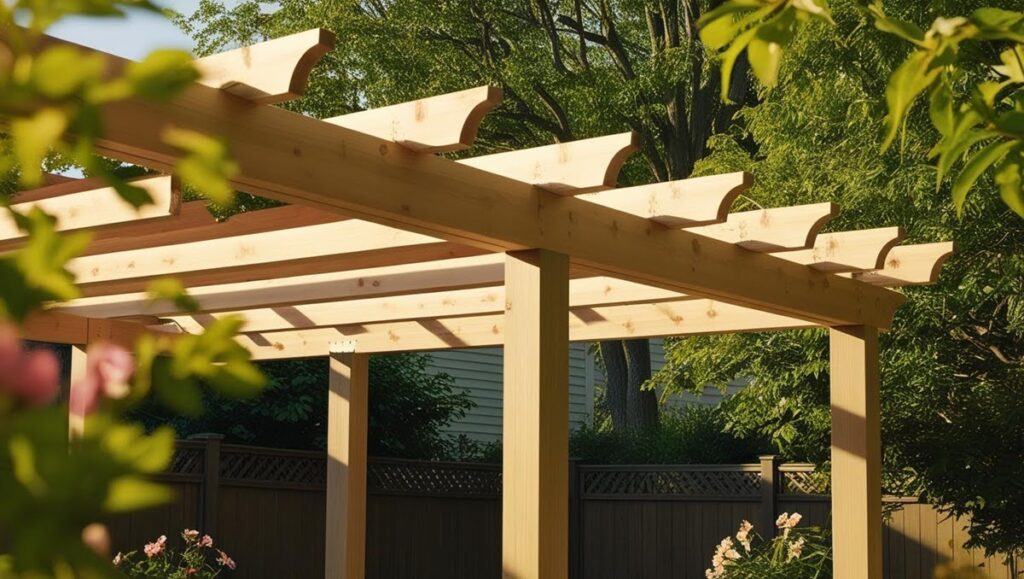
A custom pergola typically costs between $3,000 and $30,000, depending on size, materials, and complexity. Basic wood structures start around $3,000–$8,000, while mid-range designs with added features run $8,000–$15,000. High-end builds with premium materials can push past $20,000. Your location also plays a role, since labor costs and permit fees vary by area. Keep exploring this guide to make sure you’re getting the best value for your budget.
What Does a Custom Pergola Actually Cost?
Custom pergolas typically cost between $3,000 and $30,000, depending on size, materials, and complexity. A basic wood structure runs $3,000–$8,000, while mid-range designs with added features land between $8,000–$15,000. High-end custom builds with premium materials, integrated lighting, or retractable canopies can exceed $20,000.
Your location also affects pricing. Labor costs vary considerably by region, and permits add $200–$1,500 depending on local requirements.
Material choices drive costs further—cedar and redwood cost more than pressure-treated pine, while aluminum and vinyl offer durability at varying price points. Working with a professional pergola installer can also help you select suitable materials and understand installation costs. Understanding these ranges helps you budget realistically before contacting contractors.
Size, Complexity, and Site Conditions: What Drives the Price Up
When your pergola grows in size or complexity, costs climb fast. A larger footprint means more materials and longer labor hours.
Adding features like built-in lighting, retractable canopies, or decorative beam work pushes the price higher still.
Site conditions matter just as much. If your yard has poor drainage, uneven terrain, or limited access, contractors charge more to prep and navigate the space.
Concrete footings in rocky soil cost markedly more to dig. Permits add fees too, especially in municipalities with strict zoning rules.
Understanding these factors helps you budget realistically before you commit to a design.
Wood, Vinyl, or Aluminum: Which Material Fits Your Custom Pergola Budget?
Beyond site prep and permits, your material choice shapes the budget just as considerably.
Wood offers natural beauty but demands ongoing maintenance—expect to pay $25–$40 per square foot. Cedar and redwood resist rot naturally, while pressure-treated pine costs less upfront but requires more upkeep.
Vinyl runs $20–$35 per square foot, needs virtually no maintenance, and won’t warp or peel. Aluminum sits at $30–$50 per square foot, delivering superior durability and a modern aesthetic with minimal care.
Match your material to your long-term budget, not just your initial spend—maintenance costs can quietly erase early savings over time.
What Contractors Actually Include in a Custom Pergola Quote
Most contractors bundle several line items into a single quote, and knowing what’s included—and what isn’t—saves you from sticker shock later.
A standard quote typically covers materials, labor, hardware, and basic site prep. Some contractors include permit fees; others pass those costs directly to you.
Delivery charges for lumber or prefab components often appear as separate line items. Always ask whether post-hole digging, concrete footings, and debris removal are covered.
Finishing touches like staining, sealing, or lighting are frequently excluded. Working with an experienced company like Daily Landscaping can help you understand the scope of work and ensure you know what is included. Request an itemized breakdown before signing anything, so you’re comparing quotes accurately across multiple contractors.
How to Get the Best Value on a Custom Pergola Without Cutting Corners
Getting the best value on a custom pergola comes down to timing, preparation, and knowing where flexibility pays off.
Request quotes in late fall or winter when contractors have fewer jobs and more negotiating room. Have your site measurements, material preferences, and budget ready before your first call—it saves time and signals you’re serious.
Choose standard dimensions over fully custom sizes to reduce material waste and labor costs. Invest in quality where it counts: structural posts, hardware, and weather-resistant finishes. Skimp on those, and you’ll pay more in repairs later.
Get at least three itemized quotes before committing to anyone.
Frequently Asked Questions
Do I Need a Permit to Build a Custom Pergola?
You’ll likely need a permit to build a custom pergola, depending on your local regulations.
Check with your city or county building department first, as requirements vary by location, size, and whether it’s attached to your home.
Can a Custom Pergola Increase My Home’s Resale Value?
Yes, a custom pergola can boost your home’s resale value!
It enhances your outdoor living space, increases curb appeal, and attracts buyers willing to pay more, often delivering a strong return on your investment.
How Long Does It Typically Take to Build a Custom Pergola?
Building a custom pergola typically takes 1 to 3 weeks, depending on its size and complexity.
Your contractor’ll handle permits, material delivery, and installation, so you can expect the entire process to wrap up within a month.
Will My Homeowner’s Insurance Cover a Custom Pergola Structure?
Your homeowner’s insurance may cover a custom pergola, but it depends on your policy.
You’ll want to contact your insurer directly, as some classify it as a permanent structure while others treat it as an accessory.
Can I Add a Custom Pergola to an Existing Deck or Patio?
Yes, you can absolutely add a custom pergola to your existing deck or patio!
You’ll need to verify your current structure can handle the added weight, and you may require permits depending on your local building codes.
Conclusion
You now have a clearer picture of what a custom pergola actually costs and what drives that number up or down. Whether you’re choosing materials, comparing quotes, or planning your budget, the details you’ve learned here will help you make smarter decisions. If you’re searching for a pergola builder near me, take your time to compare your options, get multiple bids, and invest in quality where it counts. Your backyard transformation is worth doing right.