
When you throw a wet load of towels into the dryer and set the timer for forty-five minutes, you expect to come back to warm, fluffy laundry. Instead, opening the door to find soggy, lukewarm fabric sitting in a steamy drum is a universal disappointment. Most people immediately blame the heating element, but seasoned technicians know the real trouble usually lies behind the appliance inside the exhaust line. When warm, moisture-laden air cannot escape your laundry room, your machine turns into an expensive clothes steamer. While the symptoms of a poorly performing dryer often look identical, the underlying cause usually splits into two distinct categories: a blocked passage or structural damage. Recognizing whether you are fighting a heavy buildup of lint or a crushed exhaust pipe is critical for protecting your home and restoring laundry efficiency.
Understanding the Dynamics of Dryer Exhaust Systems
To understand why exhaust issues cripple appliance performance, it helps to look at how a clothes dryer manages heat and airflow. Modern clothes dryers operate on a simple continuous loop. The appliance draws in cool room air, heats it across an electric coil or gas burner, tumbles it through wet clothes to absorb moisture, and then forces that humid air out through an exhaust duct. The blower wheel relies on clear, unhindered airflow to push gallons of evaporated water out through your wall or roof cap.
When something disrupts this airflow, the heat and moisture have nowhere to go. The safety thermostat inside the appliance detects excessive internal temperatures and trips the heating element to prevent a fire, leaving your clothes spinning in humid, unheated air. Whether the disruption stems from a dense lint impaction or a physical collapse in the piping, the mechanical strain on your drum bearings and drive belt remains severe, making proper diagnosis essential.
Anatomy of a Clogged Dryer Vent
A clogged exhaust line is essentially a traffic jam caused by years of loose textile fibers, hair, and stray fabric softener residue. Even if you meticulously clean your lint trap after every single load, a small percentage of fine particulate matter slips past the screen. As this warm, damp lint travels down the cool interior of your rigid or semi-rigid ductwork, condensation causes it to stick to the metal walls.
Over months of regular laundry, this sticky layer catches more lint, gradually shrinking the interior diameter of the pipe. The buildup typically starts at sharp turns, forty-five degree elbows, or the exterior louvered hood where damper flaps can get stuck open. As the passage narrows, backpressure builds up inside the transition hose, forcing lint to back up directly into the appliance cabinet. This accumulation creates a major fire hazard near the heating element while drastically slowing down moisture evacuation.
Identifying Structural Damage in Your Vent Line
While a clogged vent is an accumulation issue, a damaged vent is a structural failure. Exhaust lines often run through tight spaces, including finished drywalls, drop ceilings, narrow crawl spaces, and drafty attics. Over time, these hidden pipes are exposed to physical stresses that cause physical collapses, separations, or punctures.
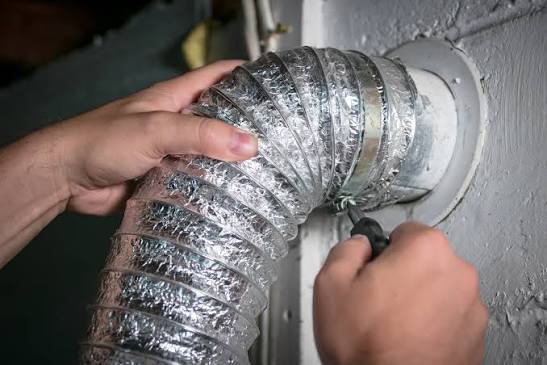
A common culprit is the flexible foil or plastic accordion tubing behind the dryer. When someone pushes the heavy appliance too close to the wall, that transition duct gets crushed flat, instantly starving the unit of airflow. In attic runs, loose mounting straps can cause long sections of rigid pipe to sag, creating low points where condensation collects and eventually causes the metal seams to rust out. Pests can also chew through flexible ducts, or accidental impacts during home repairs can disconnect pipe joints, venting hot, moist air directly into your walls or attic space.
How to Tell Clogging and Damage Apart
Distinguishing between a blockage and structural failure requires paying close attention to specific operational red flags. A clogged line usually manifests slowly over time. You might notice that heavy loads take two cycles to dry, the laundry room feels slightly more humid than usual, or the exterior wall vent flap barely opens when the dryer is running. The appliance gets hot, but the moisture simply cannot escape fast enough.
Damaged vent lines, on the other hand, often present sudden or dramatic symptoms. If a transition hose gets crushed during a laundry room cleanup, performance drops instantly overnight. Furthermore, broken or disconnected pipes leave telltale clues around the house. If you notice a sudden buildup of gray lint coating your attic insulation, smell damp laundry odors inside a hallway wall, or discover water spots on the drywall near an elbow joint, you are dealing with a ruptured duct line that is blowing moisture into your living envelope.
Professional Remediation and Inspection Strategies
Resolving these issues requires specialized diagnostic equipment and technician expertise. For a standard lint clog, technicians use rotary brush systems powered by flexible shafts alongside high-volume pneumatic air whips. This equipment scours the inner walls of the pipe, dislodging stubborn impactions from the dryer connection all the way to the exterior wall cap without scratching the duct surfaces.
When structural issues are present, simple cleaning tools are not enough. Technicians use specialized camera borescopes to inspect hidden wall runs and locate separated joints, crushed flex runs, or rusted sections. Damaged flexible hoses are replaced with durable, code-compliant rigid aluminum pipe, and loose fittings are secured with heavy-duty foil tape to ensure an airtight seal. For property owners dealing with crushed line sections or broken joints, calling in Warrior’s dryer vent repair team ensures that damaged piping is replaced and brought back up to safety standards.
Protecting Your Appliance and Restoring Efficiency
Whether your laundry room is suffering from a heavy accumulation of trapped lint or a crushed exhaust pipe behind the dryer, ignoring vent problems leads to wasted energy, premature appliance failure, and serious safety risks. Recognizing the subtle differences between a blocked airflow path and a broken pipe allows you to take swift action before moisture damages your walls or high heat damages your dryer components. Investing in routine inspections, choosing smooth metal duct materials, and maintaining clear exhaust pathways keeps your laundry routine running smoothly and your home completely safe. Reach out to a qualified vent specialist today to inspect your exhaust line, fix structural damage, and restore peak drying performance to your laundry system.