
The global demand for resilient infrastructure is at an all-time high. As urban landscapes expand and telecommunication networks shift toward 5G and beyond, the structural integrity of utility distribution systems becomes a primary concern for civil engineers and utility providers. Choosing the right support structures is no longer just about cost; it is about longevity, maintenance cycles, and environmental resistance. In this context, the industry has seen a significant shift toward specialized engineering, particularly involving materials that can withstand diverse climates and heavy mechanical loads.
Understanding the Engineering Behind a Spun Concrete Pole
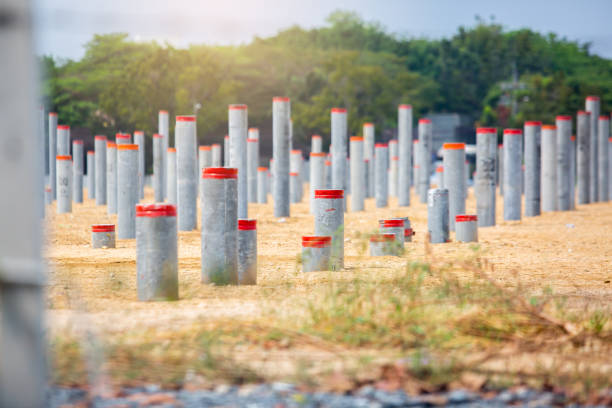
In the realm of power distribution and heavy-duty lighting, the spun concrete pole remains a gold standard for durability. Unlike traditional cast concrete, the spinning process utilizes centrifugal force to densify the concrete mixture against the mold. This results in a hollow core, which reduces the overall weight of the structure without compromising its compressive strength.
For infrastructure and civil engineering contractors, the benefits of this technology are numerous:
- High Density: The centrifugal action removes excess water and air pockets, creating a high-density concrete surface that is nearly impermeable to moisture.
- Corrosion Resistance: This density provides a natural barrier against sulfate attacks and chloride penetration, which is essential for coastal installations.
- Uniform Strength: The spinning ensures that the reinforcement steel is perfectly centered, providing 360-degree structural consistency.
- Aesthetics: These poles offer a smooth, tapered finish that fits well within both industrial and modern urban environments.
Companies like PMW Group Malaysia have been at the forefront of providing the specialized machinery required to produce these high-performance components, ensuring that manufacturers can meet the rigorous standards demanded by utility providers.
The Versatility of a Compound Lighting Pole in Urban Design
As cities move toward “Smart City” initiatives, the requirements for lighting structures have evolved. A compound lighting pole offers a modern alternative to traditional timber or steel. These poles are often manufactured using composite materials or advanced polymer-reinforced concrete, designed specifically to balance aesthetic appeal with functional resilience.
One of the primary reasons contractors are opting for a compound lighting pole is the weight-to-strength ratio. Being lighter than solid concrete yet more durable than standard steel in corrosive environments, these structures reduce the logistical costs associated with transport and installation. Furthermore, they are non-conductive, providing an added layer of safety in densely populated pedestrian areas where electrical faults could pose a significant risk.
For telecommunication providers, these compound structures can also be engineered to house internal cabling and small-cell equipment, maintaining a clean visual profile while supporting the latest network technologies.
Key Considerations for Sourcing: Pole Manufacturers Near Me
When managing large-scale civil projects, logistics often dictate the feasibility of a supplier. Searching for pole manufacturers near me is the first step for many procurement officers, but the selection criteria must go beyond simple proximity. Reliability in the supply chain is paramount, especially when dealing with the high-volume requirements of utility rollouts.
When evaluating local manufacturers, consider the following technical benchmarks:
- Manufacturing Capacity: Does the facility have the specialized molds and centrifugal machinery to produce both standard and custom heights?
- Quality Assurance: Look for ISO certifications and compliance with local utility standards (such as SIRIM or equivalent national bodies).
- Material Sourcing: Ensure the manufacturer uses high-grade aggregates and high-tensile steel reinforcements to prevent premature degradation.
- Logistics Support: Proximity is beneficial, but the ability to handle heavy-lift transport and on-site delivery coordination is what truly separates top-tier suppliers.
The expertise provided by PMW Group Malaysia in establishing and optimizing production plants has allowed many regional manufacturers to upgrade their capabilities, effectively bringing world-class manufacturing standards to local markets. This ensures that when you find pole manufacturers near me, they are equipped with the latest technology to deliver high-spec products.
Innovations in Concrete Product Manufacturing
The machinery used to create infrastructure components has seen a radical transformation. Modern plants now utilize automated batching systems and precision spinning technology to ensure every spun concrete pole meets exact tolerances. This automation reduces human error and significantly increases the throughput of the factory, allowing manufacturers to keep up with the rapid pace of civil engineering projects.
PMW Group Malaysia plays a critical role here by supplying the essential plant machinery that empowers manufacturers to produce high-quality concrete products. Their solutions cover the entire spectrum of production, from the initial steel cage spinning to the final curing stages. By investing in high-end plant technology, manufacturers can ensure their products remain competitive in an increasingly demanding market.
Maintenance and Long-Term Value of Infrastructure Assets
For power and telecommunication utility providers, the “Total Cost of Ownership” (TCO) is the most important metric. While the initial investment in a high-quality compound lighting pole or a concrete structure might be higher than traditional alternatives, the long-term savings in maintenance are substantial.
- Resistance to Biological Growth: High-density concrete and composite materials do not support the growth of moss or fungi, which can cause structural decay in timber.
- No Painting Required: Unlike steel, which requires regular repainting or galvanization checks, concrete and compound materials are virtually maintenance-free.
- Vandal Resistance: The hard surfaces are difficult to damage and can be treated with anti-graffiti coatings if necessary.
Conclusion: Building a Resilient Future
The backbone of any modern society is its utility and transport infrastructure. By utilizing advanced technologies such as the spun concrete pole for heavy distribution and the compound lighting pole for urban illumination, engineers can build networks that last for decades rather than years.
Selecting the right partners is essential to this process. Whether you are a civil contractor looking for pole manufacturers near me or a utility provider planning a nationwide rollout, focusing on material science and manufacturing excellence is the key to success. PMW Group Malaysia continues to support this industry by providing the technological foundations and machinery necessary for modern concrete production, ensuring that global infrastructure remains safe, efficient, and durable.
For more information on high-performance infrastructure solutions and manufacturing machinery, visit our website:
Contact US
Address: PMW International Berhad, Lot 133077, Jalan Lahat, Bukit Merah Industrial Estate, 31500 Lahat, Perak, Malaysia.
Phone: +605-322 4690 | +605-322 4691
Email: info@pmw-industries.com, sales@pmw-industries.com
Website: https://pmw-group.com/