
Most Calgary homeowners tackling a Calgary roof replacement for the first time have no real picture of what the project looks like once the trucks arrive. The contract says ‘three to five days.’ The salesperson said ‘we’ll be out of your hair quickly.’ Neither prepares you for the actual rhythm — the early starts, the noise, the dumpster, the choreography of materials and people moving across your property.
This is a day-by-day account of a typical mid-sized Calgary residential roof replacement — a 25-square asphalt shingle job on a two-storey home with a moderate cut-up. Every project differs in detail, but the rhythm is consistent across most Calgary residential replacements. Knowing what to expect makes the week dramatically less stressful.
Day 0: the day before
The day before the crew arrives is when the homeowner’s preparation work happens. The contractor delivers materials to the driveway — shingles palletized, underlayment rolls, flashing kits, nails, starter strip. The pallet weighs several tons, so placement matters. Discuss in advance where it goes so it doesn’t kill grass or block access.
The dumpster arrives the same day, usually at the curb or in the driveway. A 14-yard roll-off is standard for a 25-square tear-off. It sits there for the duration of the project.
Inside the house, take down anything fragile from walls directly under the roof. Pounding on the deck transmits vibration to wall framing, and pictures that have hung quietly for ten years will work loose. The attic should also be cleared — debris and dust will fall through any open seams during the work.
Day 1: tear-off
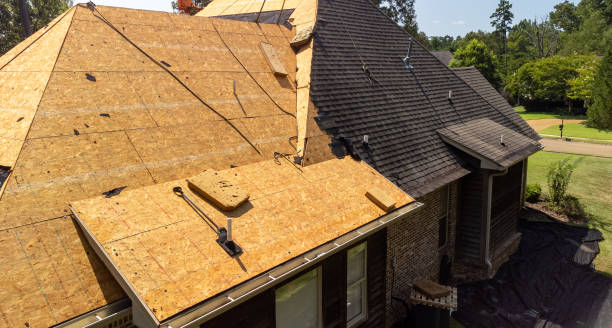
The crew typically arrives between 7 and 8 a.m. and works until late afternoon. Day one is dedicated entirely to tear-off — removing the existing shingles, underlayment, ridge caps, and damaged flashing.
The work is loud. Shingles are pried up with roofing shovels, dropped into the dumpster, and the deck is swept clean for inspection. Anything that’s seen daylight in your attic for 30 years comes out in chunks — even with tarps in place, expect some scatter that needs post-project cleanup.
Tear-off reveals the actual deck condition. Most Calgary roofs have decks in good shape, but rotted sections around chimney bases, near skylights, or at valleys are common. Reasonable contractors quote sheathing replacement at $80 to $120 per sheet of OSB plus labour.
By end of day, the deck is exposed, swept, and either tarped overnight or covered with ice-and-water shield. The house is weather-tight either way. Watch the weather forecast and discuss contingencies with the foreman.
Day 2: underlayment, flashing, and starter
Day two installs the components that go under the shingles. Ice and water shield gets applied to the eaves, valleys, around penetrations, and any other code-required or contractor-specified locations. The shield is a self-adhering rubberized membrane that seals against water intrusion in the spots where conventional underlayment would let water through.
Above the ice and water, synthetic underlayment covers the rest of the deck. The full deck is now waterproofed even before a single shingle is on the roof. Many contractors photograph the underlayment stage as documentation that the substrate work was completed correctly.
Flashing components install next. New step flashing at any wall intersection, new chimney flashing with proper counter-flashing into mortar joints, new pipe-stack boots, valley metal where specified, and drip edge along all eaves and rakes. The flashing details are where most leaks originate over a roof’s life — a contractor who takes time on this day is buying decades of leak-free service.
Starter strips get nailed along the eaves and rakes. This is the final substrate work before the field shingles begin. By end of day two, the roof is fully prepared and the visible work transitions to shingle installation.
Day 3: shingles up to the ridge
Day three is the day the roof starts to look like a roof. Field shingles install from the eaves upward, course by course, with each course offset from the one below according to the manufacturer’s pattern.
On a 25-square home with a moderate cut-up, an experienced crew of three to four installers can lay roughly 15 to 20 squares of field shingle in a full day. That covers most of the simple slopes and leaves the complex sections — valleys, hip details, dormers — for day four.
Six-nail installation is the standard for warranty validity on premium products. The hammering is constant. Pneumatic nail guns drive nails at high speed, and the rhythm of guns across the deck is the dominant sound of day three. Plan around it — schedule work-from-home calls for elsewhere, give pets a quiet room indoors, and accept that this is the worst-noise day of the project.
By end of day, most of the easy slopes are shingled. The roof looks roughly 70 percent complete from the street. The crew tarps any open sections overnight and stores remaining bundles on the roof or in the yard, ready for day four.
Day 4: cut-ups, valleys, and ridge
Day four is the technical work. The remaining shingles install on the more complex sections — valleys, dormers, hips, the ridge itself. This is where craftsmanship distinguishes a competent crew from an excellent one.
Valleys can be installed in several styles. Open valleys use exposed metal flashing with shingles cut back on either side. Closed-cut valleys lap one slope’s shingles over the other and trim the upper layer. Woven valleys interlace both slopes — an older technique that fewer contractors do well anymore. The contractor should have explained the chosen valley style during the quote stage; day four is when it gets executed.
Hip and ridge caps install last. Premium ridge products use thicker caps with longer nails to handle wind uplift. The ridge ventilation strip is installed continuously along the peak, then capped with the hip-and-ridge shingles. Ventilation work at this stage matters as much as the cap installation itself — a properly ventilated ridge extends shingle life on the rest of the roof.
By end of day four, the roof is functionally complete. Final inspection by the foreman catches any nail-pop issues, alignment problems, or missed flashing detail. Touch-ups happen the same day where possible.
Day 5: cleanup and final walkthrough
Day five is shorter than the others — typically four to six hours rather than a full work day. The crew focuses on cleanup and final inspection.
Cleanup is more involved than most homeowners expect. The crew walks the entire property with magnetic sweepers, pulling nails out of the lawn, the flower beds, the driveway, and any spot where roofing debris might have landed. Gutters get cleaned of granule debris and tar bits. The tarps come down, the leftover materials get loaded onto the truck for return, and the dumpster gets called for pickup.
The foreman walks the property with the homeowner for the final inspection. This is the moment to ask any remaining questions, point out any concerns, and confirm the warranty documentation. A good contractor produces a complete warranty packet at this stage — manufacturer warranty registration, contractor workmanship warranty, photographs of installed work, and confirmation of materials installed. Keep this packet with the home documents permanently.
What can extend the timeline
Most Calgary residential roofs replace in three to five working days. Several factors can extend the timeline:
- Rain or storm delays. Calgary’s spring and summer weather is unpredictable; one or two weather days per project is common.
- Significant deck replacement. Heavy rot or structural issues discovered during tear-off can add a day or two.
- Complex roofs. Steep pitches, multiple dormers, custom architectural features, and combinations of materials all slow the work.
- Skylight or vent installations done during the same project. Each addition adds 2 to 4 hours of crew time.
- Materials delays. Specific products or colours occasionally backorder, particularly during peak storm-response season.
A contractor who builds slack into the timeline for these contingencies — rather than promising ‘three days’ when five is realistic — is more reliable to work with than one who hits aggressive quoted timelines by cutting corners on details. The Calgary residential roofing crew that does the work right rarely finishes in the minimum quoted window, and that’s a feature, not a bug.
The week is over before you realize
A roof replacement is one of the larger projects a Calgary homeowner will do, but the active disruption is genuinely brief — a week from materials delivery to dumpster pickup. The house stays livable throughout. The crew stays outside. By the following Monday, the only evidence of the project is a new roof and a stack of warranty paperwork.
Knowing the rhythm changes the experience. The noise stops bothering you when it’s day three of five. The dumpster looks temporary when you know it’s leaving Friday. Small surprises feel like normal events rather than crises.
About the author — this article was contributed by Angel’s Roofing, a Calgary residential roofer with a full-time safety coordinator and COR certification. The company manages every project on a documented schedule with daily client communication and same-week completion on standard-scope residential replacements.