
A balance sheet is the financial document that tells you where your business stands at a specific point in time — what you own (assets), what you owe (liabilities), and what’s left over (equity). Unlike an income statement that shows performance over a period, a balance sheet is a snapshot. It answers the question: if we stopped operating today, what would the numbers look like? For business owners, lenders, and investors, it’s the foundational document for assessing financial health.
Most small and mid-sized businesses don’t produce balance sheets regularly enough. They track cash flow and monthly revenue, but don’t formally reconcile assets and liabilities until tax time — which means they’re often surprised by their own financial position. A structured balance sheet template used quarterly gives decision-makers the visibility they need to manage the business proactively rather than reactively.
Assets, Liabilities, and Equity: What Goes Where
The balance sheet has a simple structure: Assets = Liabilities + Equity. Every number on the sheet falls into one of these three categories, and they must balance exactly — hence the name. Getting the categorization right is where most small business balance sheets go wrong.
Common mistakes: treating accounts receivable as cash (it’s a current asset, not revenue), recording leased equipment as owned (operating leases are liabilities, not assets), and confusing owner draws with business expenses. A well-structured template with clearly labeled fields and category definitions prevents these errors by guiding users through the correct classification at the point of entry.
Budget Templates for Ongoing Financial Planning
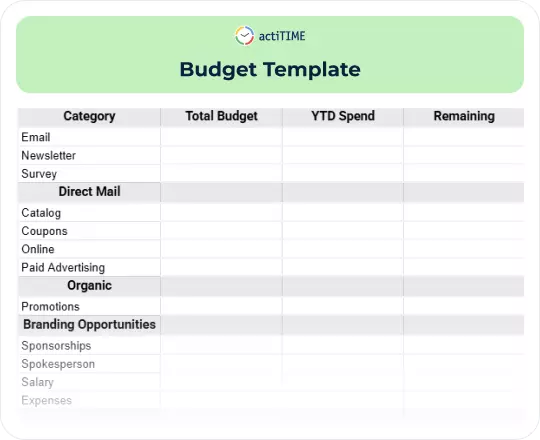
A balance sheet shows where you are; a budget shows where you’re going. The two documents work together — budget variances show up as changes in cash position and accounts payable that appear on the next balance sheet. Business budget templates that use the same categorization as your balance sheet make this connection explicit, so financial planning and financial reporting tell a consistent story rather than two disconnected narratives.
Construction and Project-Based Businesses
Construction firms and project-based businesses have balance sheet complexity that general templates often don’t address: work-in-progress (WIP) accounting, retention receivables, equipment depreciation schedules, and project-specific bonding requirements. For these businesses, the balance sheet needs to reflect not just overall company position but the financial status of individual projects — how much has been billed, how much has been collected, and what’s still owed on each active job.
Construction estimation templates that feed into project accounting give construction firms a starting point for the project-level data that eventually rolls up to the company-wide balance sheet. When project financial data is captured consistently from the beginning of each job, the balance sheet preparation at quarter’s end becomes a consolidation exercise rather than a discovery process.
Using Templates as a Bridge to Accounting Software
Balance sheet templates are the right tool for early-stage businesses and those doing their first formal financial reporting. As the business grows — more transactions, more asset categories, more complex liability structures — templates become harder to maintain accurately. The transition to accounting software should happen before the template becomes a liability in itself: when reconciliation takes more than a few hours per quarter, the time cost of maintaining the template exceeds the cost of the software that would replace it.