
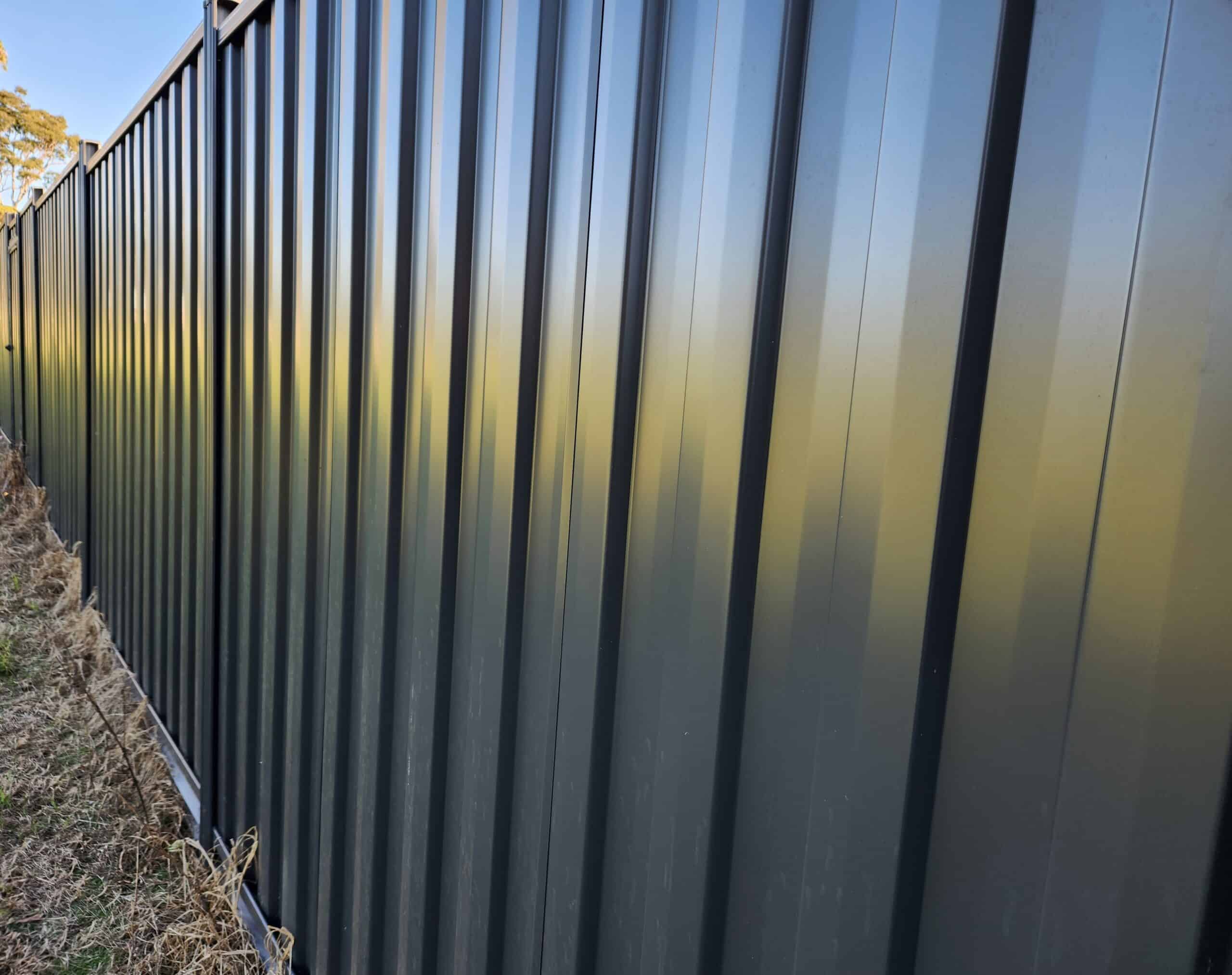
What to Ask a Colorbond Fence Company
In short: Colorbond fence quotes are rarely like-for-like, and the cheapest one often costs more in the long run. Before you sign, ask each contractor about genuine materials, warranties, insurance, footing depth, what’s included, asbestos, council and services checks, sloping ground, dividing fence arrangements, and payment terms. A trustworthy installer will answer all 10 questions clearly and put the answers in writing.
You’ve collected three quotes for a new Colorbond fence. One is $1,500 cheaper than the others, and it’s tempting. But fencing quotes are rarely like-for-like. The cheapest price on paper often turns into the most expensive fence a few years down the track, once posts start leaning, panels rattle in the wind, or surprise charges appear on the final invoice.
Colorbond is one of Australia’s most popular fencing choices for good reason. It’s low maintenance, it doesn’t rot, termites leave it alone, it’s non-combustible, and a well-installed fence lasts for decades. But the steel is only half the story. The other half is how it goes in the ground.
These 10 questions show you which contractors are quoting properly and which are cutting corners. A good installer will be happy to answer every one of them, and to put the answers in writing.
1. Is this genuine Colorbond steel, and what profile and thickness is it?
“Colorbond” gets used loosely. Genuine Colorbond is a BlueScope steel product, and there are cheaper painted-steel alternatives on the market that look similar on the day of installation but may not age the same way.
Ask the contractor to name the brand and the fencing system on the quote, along with the panel profile and the thickness of the sheets, posts and rails. Thicker, better-quality components resist dents and flex less in strong wind. When the materials arrive on site, ask to see the branding on the sheets. A reputable installer won’t mind.
2. What warranty do I get, on the materials and on the workmanship?
There are two separate warranties to ask about:
- Materials warranty: provided by the manufacturer and covering the steel itself.
- Workmanship warranty: provided by the contractor and covering the installation.
The second one matters just as much as the first. A fence that leans because the footings were too shallow isn’t a materials fault, so the manufacturer won’t cover it. Poor installation can even void the manufacturer’s warranty. Ask how long the workmanship warranty runs, what it covers, and get it in writing.
3. Are you insured, and what does your insurance cover?
Fence installation involves digging holes near water pipes, gas lines, cables and tree roots, and working right on the boundary with your neighbour’s property. If something goes wrong, you want it to be the contractor’s problem, not yours.
Ask for a certificate of currency for public liability insurance and check the expiry date. It’s also worth confirming the business has an ABN and checking whether any registration or licensing applies to the work in your state, as requirements vary across Australia.
4. How deep are the post footings, and how far apart are the posts?
This is where cheap quotes most often cut corners, because it’s the part you can’t see once the job is finished.
Ask how deep each post hole will be, whether posts are concreted in, and what spacing the panels will have. Exposed sites, such as corner blocks, coastal properties, and homes facing open land, take much more wind load than a sheltered suburban backyard and may need deeper footings or extra support. If a fence leans or starts flapping after its first big storm, the footings are usually to blame.
5. What’s included in the price, and what costs extra?
A one-line quote with a single total is a red flag. Ask for an itemised quote and check whether it covers:
- Removal and disposal of the old fence
- Site clean-up and rubbish removal
- Gates, hinges and latches
- Plinths or retaining at the base of the fence
- Extra height or lattice toppers
- Colour choice (some colours or a different colour on each side can affect price)
Then ask the big one: what happens if you hit rock, concrete, rubble or tree roots while digging? Some contractors charge variations for difficult ground. That’s fair enough, but you should know how it’s calculated before you sign, not after.
6. What happens if the old fence contains asbestos?
Many older fibro fences, particularly those built before the 1990s, contain asbestos. It’s not something to be knocked down and thrown in a skip.
Asbestos must be identified and removed safely by a licensed removalist, and disposal is regulated. Ask the contractor whether they’ll check the old fence before the job starts, whether they’re licensed to remove it or will subcontract someone who is, and who pays for it. A contractor who shrugs this question off isn’t someone you want working near your family.
7. Will you handle the services check and any council requirements?
Before any digging, underground services should be located through Before You Dig Australia (BYDA). Hitting a gas line or communications cable is dangerous and expensive. Ask whether the contractor lodges the request as standard.
Also ask about approvals. Height limits, front fences, corner sites (where fences can affect driver sight lines), heritage overlays and easements can all trigger council requirements. Taller fences generally need a permit. Rules vary by council, so ask who is responsible for checking, and who wears the cost if a required permit wasn’t obtained.
8. How do you deal with sloping ground?
Very few backyards are perfectly flat. On a slope, a Colorbond fence is installed either:
- Stepped: each panel sits level, stepping down the slope like a staircase. This can leave triangular gaps at the bottom that need filling.
- Raked: panels follow the angle of the ground for a continuous line.
Each option looks different and can be priced differently. Ask which approach the contractor recommends for your site, how they’ll handle gaps, and whether plinths will be used to hold back soil. If your block has significant fall, ask to see photos of past jobs on similar ground.
9. Can you help with the neighbour side of a dividing fence?
Most Colorbond fences are dividing fences, which means your neighbour is involved whether you like it or not. In Victoria, the Fences Act 1968 sets out how neighbours share the cost of a dividing fence and the process for giving notice. Other states have their own equivalent laws.
There are also practical questions. Which colour faces which side? Will the contractor need access to the neighbour’s yard? Who is paying what? Some contractors can provide split invoices or help with the paperwork, which makes the conversation with your neighbour much easier. It’s worth asking.
10. What’s the timeline and the payment schedule?
Ask for a realistic lead time for materials and a start date, how long installation will take, and how weather delays are handled.
Then look closely at payment terms. Be wary of large upfront deposits, especially if the contractor wants most of the money before any materials arrive. Staged payments or payment on completion protect you if things go wrong. Whatever you agree, get the scope, price, start date and payment terms in a written contract, not just a text message or a verbal promise.
Red flags that should make you walk away
- A “cash discount” with no paperwork or receipt
- Pressure to sign today, or a price that “expires tonight”
- No ABN, no insurance certificate and no physical business address
- A quote far below the others with no explanation of why
- Reluctance to put warranties or inclusions in writing
- Vague answers about footings, asbestos or extra charges
The bottom line
A new fence is a 20-plus-year decision, and the difference between a good job and a bad one is usually decided before the first post goes in. Get two or three itemised quotes, ask every contractor the same 10 questions, and compare their answers, not just their totals.
The right Colorbond steel fence installer will answer these questions without hesitation, explain the trade-offs honestly, and put everything in writing. If a contractor can’t or won’t, that tells you everything you need to know.