
The Economics of Annoyance
You’ve probably been there – cruising along, minding your own business, and then suddenly there it is: a speed bump looming ahead. You grit your teeth and prepare for the impact. Thump. Your teeth are rattling, your coffee is threatening to spill, and you can’t help but exclaim, “Who on earth greenlit this nightmare?”
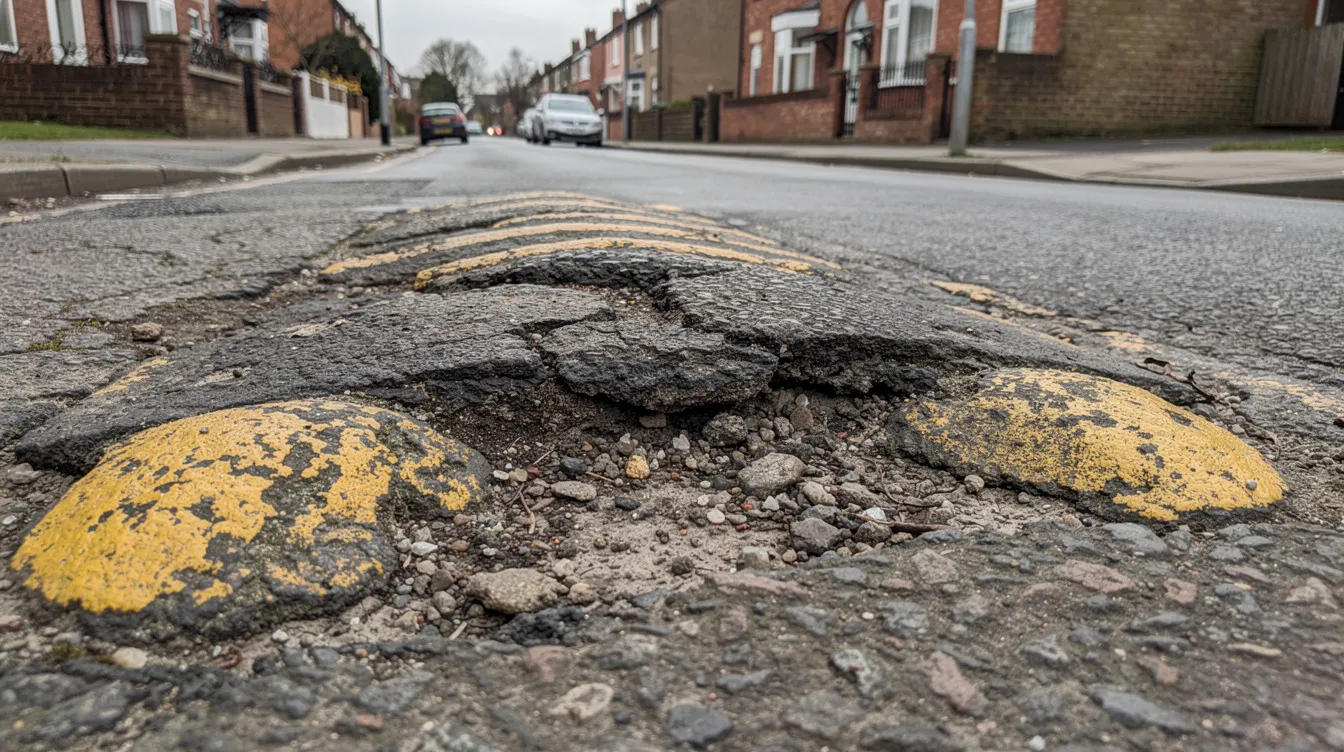
It’s a familiar scene, but here’s the not-so-pleasant truth that councils tend to gloss over: when a speed bump is universally despised, it’s usually because it’s a rubbish design. The problem isn’t that traffic calming doesn’t work; the problem is that too many councils are installing the cheapest, most brutal option they can find – and then acting surprised when residents get really upset.
Let’s dig into the economics of annoyance and why shelling out a bit more upfront actually ends up saving money and reputations in the long run.
The Real Cost of Cheap Speed Bumps
On paper, a standard asphalt speed hump looks like a steal. It might set a council back £1,500 to install. A more advanced sinusoidal hump or a speed table might cost £3,000 to £6,000. When budgets are tight, the choice seems obvious.
But that cheap hump packs a bunch of hidden costs that quickly add up. You’re looking at vehicle damage claims (I’ve seen cases where bumps exceeding height guidelines scrape the undercarriages of family cars), endless complaint handling (some councils have received over 50 complaints about a single set of bumps), and, worst of all, the reputational damage of having a bunch of angry residents who feel like they’re being ignored.
When a hump is way too steep (often pushing 10% grade), it doesn’t just slow traffic down – it punishes it. It creates this deafening thump that residents say is so loud it penetrates their homes, forcing them to wear earplugs in their own gardens. The problem isn’t that traffic calming measures don’t work to improve road safety. That’s not traffic calming – that’s just being a neighbourhood nuisance.
Well-designed traffic calming can cut crashes and injuries by up to 40%, mainly by bringing traffic speed right back down rather than just annoying drivers.
The Good, the Bad, and the Sinusoidal: Traffic Calming Measures
So what’s a good speed bump supposed to look like? Well, the answer is actually pretty simple: it’s called a sinusoidal profile. Think of it like a gentle wave rather than a flat, nasty ramp. Compared with crummier measures installed on the carriageway, speed bumps are typically around 10-15 cm high and 4-6 m long. Traffic calming schemes also use road humps, speed ramps, and mini roundabouts to reshape the road and get traffic moving at a slower pace in high-speed areas.
The sinusoidal hump was designed in the Netherlands and Denmark, and it’s got a much shallower initial rise. This design isn’t just more comfortable for drivers – it’s also meant to discourage drivers from keeping up high speeds, while being less of a disruption for motorists and big vehicles like buses. This design actually improves safety for cyclists, pedestrians, other road users, generates a lot less noise, and is more considerate of local residents and the emergency services. It can also effectively bring traffic speed down without hitting you over the head with a harsh impact. That matters in residential areas and near schools, where these features are commonly used because they reduce vehicle speeds by 10-15%. On urban roads, 30 km/h speed limits are generally preferred, and Graz, Austria, has made them the norm on 75% of its streets since 1994. As an example, speed tables are often installed at mid-block crossings to support road safety. Road narrowings can also be implemented with staggered build-outs as a horizontal deflection treatment.
The trials have shown us that it’s worth doing this the right way. One study found that after putting in new, better-designed speed humps, more than half of residents surveyed said they thought their neighbourhood was more liveable, and they had more peace of mind. If humps are too steep, they can cause problems, so in the UK they have to follow the rules and have reflective materials to alert drivers and help them keep a safe speed as they pass. Vehicle-activated signs can display messages to speeding vehicles and encourage them to comply with speed limits. Their effect tends to wear off when they stay in one place, so temporary units can be moved to keep them effective, alongside police enforcement where it’s needed. When the design is right, the complaints disappear, and the community actually supports the scheme.
The Quicksetts Solution: Where products like Jobling Purser’s Quicksetts come into their own
Traditional asphalt humps can be a bit of an eyesore on the road – grey and unwelcome. Quicksetts are surface-mounted high-performance cobbles that at last give us a fast, effective and visually attractive alternative to the hump. They also do a good job of bringing a flat-topped speed table into the mix. That’s often used at crossings or mid block locations to make it safer for pedestrians.
Why they’re actually the smarter option:
-
Heritage & Aesthetics: They look like traditional granite setts. That’s perfect for conservation areas, historic town centres, and village gateways where a standard black hump would be a total eyesore. They turn a traffic calming measure into a bit of placemaking – and can even be used alongside speed limit signs and other warning signs. You know, to get the point across.
-
Built to Last: Quicksetts are engineered to handle heavy traffic – including delivery vans, buses, and all the like. They won’t crack, crumble or break up under pressure, and they will last you a heck of a lot longer than standard asphalt. Plus they work well with other traffic calming features in wider schemes.
-
For people: They’ve got a smooth chamfered edge. That’s nice because it lets vehicles pass smoothly, with no jarring thump. Some schemes also use speed cushions so larger vehicles can pass more easily, while still slowing down smaller traffic. And – wonderfully – it stops pedestrians tripping on the edge of the hump. It’s safer for everyone. Better profiles keep vehicle speeds down, at a safe speed for all road users. And in broader layouts, the same thinking helps reduce the width of the carriageway by narrowing one or both sides; that limits the road width to one-way traffic flow, and can be paired with barriers to block through-traffic while still letting pedestrians through. On tighter streets especially where there’s oncoming traffic, this encourages slower speeds naturally. It also supports priority working (making traffic easier to read and improves flow) which is also a win for home zones, or woonerven, first developed in the Netherlands in the 1960s and have over 6000 prioritizing cyclists and pedestrians by the 1999.
-
Instant transformation: That’s a huge practical benefit. Quicksetts can be bonded directly onto an existing road surface and opened to traffic within hours. For a high street or a busy junction, that means minimal disruption and no lengthy road closures. In Portland, traffic calming measures reduced daily traffic volume by 16%. You can install them strategically with chicanes or lane markings that create narrow traffic lanes, and they complement gateway treatments where road narrowings and a narrow approach help organise movement. Design also matters: the shape of speed bumps can reduce accidents involving pedestrians by 25%. Just shape them well.
The Bottom Line on Road Markings
When you do the maths on a project’s whole lifecycle, the “expensive” option is all too often the real bargain.
An asphalt hump can bring years of complaints and the eventual cost of replacement. A well-designed Quicksetts scheme, on the other hand, is a shrewd investment. It saves you money on maintenance; unlike rubber speed bumps which help control traffic speed, are more forgiving on vehicles and pedestrians, and require minimal upkeep, it also gives a longer-lasting finish that’s suited to permanent traffic calming schemes. It also protects the council from liability – and on top of that, it saves lives without hurting anyone’s day.
So the next time you hit a bone-jarring bump, instead of cursing traffic calming, curse the false economy that built it. And ask your local council why they didn’t go with the better option.