
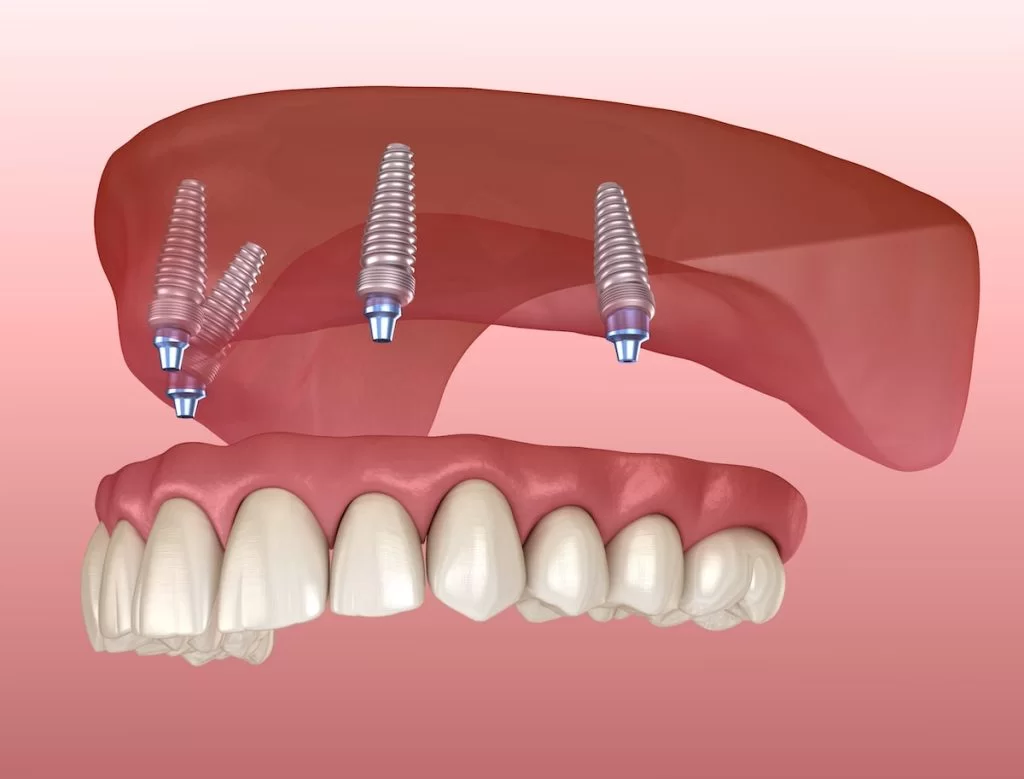
Missing most or all of your teeth can affect your ability to eat comfortably, speak clearly, and smile with confidence. All on 4 Dental Implants provide a full-arch tooth replacement solution by supporting an entire set of replacement teeth on four strategically placed dental implants. For many patients, this treatment offers an alternative to traditional removable dentures while restoring both function and appearance. Understanding the treatment process and long-term care requirements can help you decide whether this option may be suitable for your needs.
What Are All on 4 Dental Implants?
All on 4 is a dental implant technique used to support a complete upper or lower arch of replacement teeth.
Instead of placing an implant for every missing tooth, four implants are positioned strategically within the jawbone to support a fixed prosthesis.
This approach provides stability while replacing multiple missing teeth with a single, carefully designed restoration.
Every treatment plan is customised to suit the patient’s individual oral health needs.
Who May Benefit From This Treatment?
Patients who have lost most or all of their teeth or have teeth that cannot be restored may be suitable candidates.
Suitability depends on factors such as overall health, gum condition, jawbone quality, and individual treatment goals.
A comprehensive dental examination, including diagnostic imaging, allows the dentist to assess whether this treatment is appropriate.
Each recommendation is based on a personalised clinical assessment.
A Thorough Assessment Comes Before Treatment
Planning is one of the most important stages of implant treatment.
During the consultation, your dentist evaluates your oral health, reviews your medical history, examines your bite, and assesses bone structure using appropriate imaging.
This detailed assessment helps create a treatment plan that reflects your unique circumstances and long-term goals.
Careful planning contributes to predictable treatment outcomes.
Replacing Missing Teeth Supports Oral Health
Living with multiple missing teeth can affect more than appearance.
Tooth loss may reduce chewing efficiency, alter speech, affect facial support, and contribute to changes in the jawbone over time.
Replacing missing teeth helps restore everyday function while supporting overall oral health and facial structure.
Early treatment planning may also help reduce future complications associated with prolonged tooth loss.
Healthy Gums and Bone Are Important
Successful implant treatment depends on a healthy foundation.
Existing gum disease or other oral health concerns are generally treated before implant placement begins.
Your dentist will also assess bone quality to determine whether additional procedures are required before treatment.
Maintaining healthy gums both before and after treatment supports long-term implant stability.
Treatment Involves Several Stages
All on 4 treatment is carefully planned and completed over multiple stages.
These may include assessment, treatment planning, implant placement, healing, and fitting the final fixed restoration.
Healing times vary between patients depending on individual health, bone quality, and treatment complexity.
Your dental team will explain the expected timeline during your consultation.
Daily Cleaning Remains Essential
Although replacement teeth cannot develop cavities, the surrounding gums and implant areas still require daily care.
Brushing, cleaning around the implants using recommended techniques, and attending professional maintenance appointments help maintain healthy tissues and reduce plaque build-up.
Good oral hygiene remains one of the most important factors in long-term implant success.
Daily care continues even after treatment is complete.
Regular Dental Reviews Help Maintain Results
Routine follow-up appointments allow the dentist to monitor implant stability, gum health, bite function, and the condition of the prosthesis.
Professional cleaning and periodic assessments help identify any concerns before they become more significant.
Regular maintenance supports the longevity of both the implants and the replacement teeth.
Ongoing care is an important part of treatment success.
Healthy Lifestyle Habits Support Long-Term Outcomes
General health and lifestyle choices influence oral health throughout life.
Maintaining a balanced diet, avoiding tobacco products, managing existing medical conditions, and following professional oral hygiene advice all contribute to healthier supporting tissues around dental implants.
Protecting your oral health after treatment helps maintain long-term results.
Healthy daily habits benefit both natural tissues and implant restorations.
Every Patient Receives a Personalised Treatment Plan
No two patients experience tooth loss in the same way.
Bone volume, gum health, bite alignment, medical history, and personal expectations all influence treatment recommendations.
A personalised consultation allows your dentist to determine whether All on 4 treatment is suitable while explaining all available options.
Individual assessment remains the foundation of successful care.
A Long-Term Approach to Restoring Your Smile
Replacing an entire arch of missing teeth is about restoring function as well as appearance. The ability to chew comfortably, speak clearly, and maintain oral health contributes significantly to overall quality of life.
With careful treatment planning, consistent oral hygiene, regular dental reviews, and ongoing professional care, All on 4 Dental Implants can provide a stable, long-term solution for patients seeking to restore their smile while supporting lasting oral health.