
The accelerating velocity of global data streams creates a profound technical deficit. As sensor networks, market feeds, and telemetry systems generate information at rates that exceed the synchronization capabilities of classical processors, any delay in analysis results in stale intelligence. This gap is not merely a matter of insufficient storage capacity; it is a fundamental breakdown in the efficiency of moving data between memory and logic units. The primary driver of this bottleneck remains the von Neumann architecture. Because traditional computing relies on a physical bus to transfer data between the processing unit and system memory, the bandwidth of that connection serves as a hard ceiling for processing speed. In high velocity environments, the processor often spends more cycles waiting for memory fetches than performing actual calculations. This creates a processing backlog where incoming data overwhelms system capacity, leading to increased jitter and eventual failure in time sensitive applications.
Architectural Shifts Toward Data Proximity
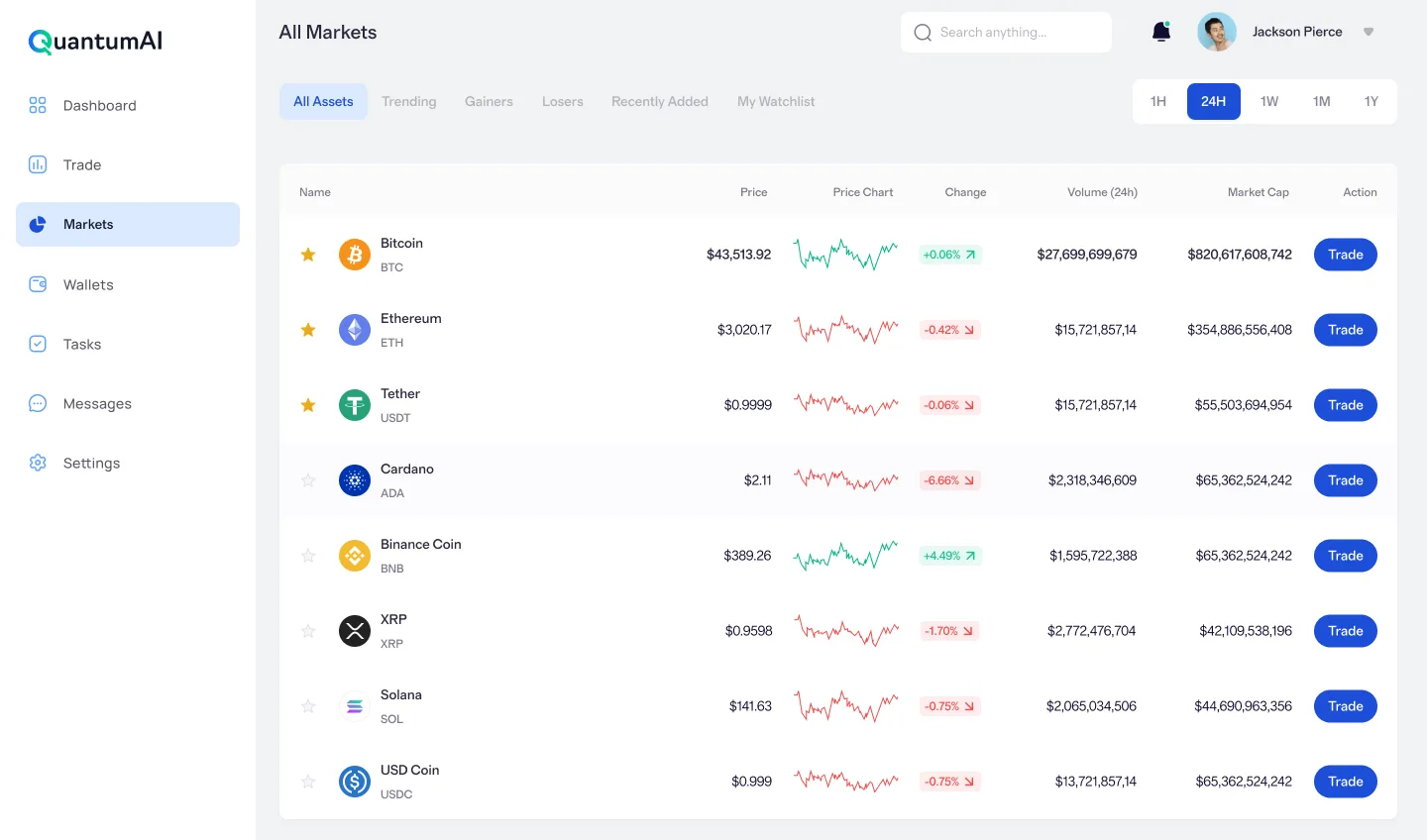
To resolve this bottleneck, modern engineering is moving toward architectures that prioritize data proximity through near-data processing and compute-in-memory strategies. By executing logic directly within or adjacent to the memory controller, engineers can reduce the energy and time costs associated with large scale data movement. This structural change is necessary for handling multidimensional streams where the volume of incoming packets would otherwise saturate standard bus bandwidths. The deployment of specialized hardware provides another layer of defense against processing bottlenecks. While general purpose CPUs are designed for versatile tasks, they lack the arithmetic density required for intensive parallel tasks. FPGAs and ASICs allow developers to encode algorithmic logic directly into the silicon circuitry. This level of specialization is widespread in sectors where even a microsecond of delay can result in significant errors. For instance, an automated trading platform relies on these hardware optimizations to execute complex models against live market feeds with minimal latency. In such environments, the architecture is tuned for high throughput and deterministic response times, ensuring that the execution of a signal remains synchronized with the arrival of the underlying data.
The Throughput-Latency-Precision (TLP) Trade-off Model
When designing an algorithmic pipeline, engineers must move beyond simple accuracy metrics and implement a framework that accounts for the relationship between complexity and throughput. The TLP model evaluates whether a computational approach remains sustainable as data loads increase by analyzing three interdependent pillars: 1. Computational Precision: The bit width and mathematical complexity of the instruction set, such as floating point versus fixed point arithmetic. 2. Processing Latency: The time taken for a single unit of data to traverse the logic pipeline from ingestion to output. 3. System Throughput: The total volume of data processed per unit of time across the entire architecture. To apply this model, consider two contrasting implementation strategies for a high velocity sensor stream. A High-Precision Strategy uses 64 bit floating point operations to achieve maximum mathematical fidelity. While accurate, the increased complexity leads to higher latency and lower throughput, meaning the system will eventually develop a processing backlog during peak data periods. Conversely, a Stream-Optimized Strategy employs 16 bit fixed point arithmetic and bitwise operations. By accepting a microscopic margin of error, the reduction in instruction complexity allows for much higher throughput, preventing data accumulation by ensuring the processing rate stays ahead of the incoming data arrival rate.
Quantum-Inspired Logic and Combinatorial Optimization
The next stage of advancement involves integrating quantum-inspired logic into classical processing pipelines. While large scale, fault tolerant quantum computers are still under development, the application of quantum principles such as superposition to classical probabilistic models offers a way to enhance pattern recognition within existing hardware. These methods enable an algorithm to evaluate multiple potential states of a system within a single computational cycle. This capability is particularly useful for searching through unstructured datasets or massive decision trees where the number of variables grows exponentially. By using these techniques, engineers can identify optimal paths that would be computationally impossible for standard sequential processors to navigate in real time. The evolution of algorithmic processing depends on this transition from increasing raw transistor counts to refining the orchestration of data movement and specialized logic. Reducing the distance between information and execution remains the only way to prevent the growing gap between the generation of data and its actionable analysis.