
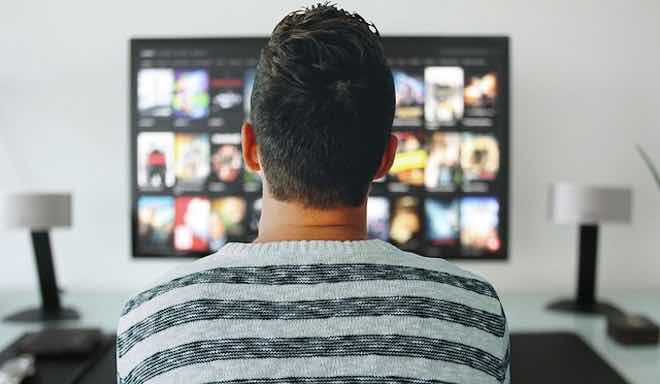
Connected television has quietly shifted from a peripheral viewing option to a central pillar of modern media planning. What began as an alternative for cord-cutters has matured into a sophisticated advertising environment that combines the storytelling power of traditional television with the precision once reserved for digital channels. Brands that once treated streaming as an experimental add-on now allocate meaningful portions of their budgets to it, recognizing that audiences have permanently altered how they consume video content. This evolution is not merely about more screens; it reflects deeper changes in attention, measurement, and the relationship between advertiser and viewer.
Precision Meets Scale on the Living Room Screen
One of the most significant developments is the ability to deliver highly targeted messages at a scale previously associated only with linear television. Connected TV platforms collect first-party data from authenticated users, enabling advertisers to reach specific households based on demographics, interests, purchase history, and even real-time behaviors without relying on the opaque third-party cookies that once dominated digital advertising. This addressability allows a single creative to appear in millions of homes while remaining relevant to each viewer’s context.
The practical result is a reduction in wasted impressions. A financial services brand can prioritize households showing interest in refinancing, while a packaged goods company can focus on households that recently purchased complementary products. Unlike earlier digital video formats that often interrupted mobile experiences, connected TV ads typically appear within premium, full-screen environments where viewers are more likely to remain attentive. The combination of large-screen impact and data-driven relevance creates an efficiency that traditional broadcast and pure digital channels struggle to match independently.
Shifting Audience Habits and the Fragmentation Challenge
Viewing patterns have fragmented across dozens of streaming services, each with its own interface, content library, and advertising model. Audiences no longer gather around a shared schedule; they select what to watch and when, often jumping between platforms within the same evening. This fragmentation initially appeared to dilute advertising opportunities, yet it has instead forced the industry to develop more sophisticated planning approaches.
Advertisers now build audience segments that travel across multiple connected TV environments rather than buying inventory on a single network. Cross-platform measurement tools have improved, allowing planners to understand reach and frequency across services that do not share the same ownership. The challenge remains substantial—different platforms still use distinct identifiers and reporting standards—but the trajectory is clear. Brands that treat connected TV as a unified ecosystem rather than a collection of isolated apps gain a more coherent view of their audience and can optimize spend accordingly.
Creative Adaptation for an Interactive Medium
Creative strategy has also evolved. Early connected TV campaigns often recycled linear television spots with minimal adjustment. Experience has shown that this approach underperforms. Viewers expect production quality consistent with the premium content they choose, yet they also respond to messages that acknowledge the interactive nature of the platform.
Successful creative frequently incorporates subtle calls to action that can be completed with a remote or companion device, such as scanning a QR code or visiting a branded experience. Storytelling tends to favor shorter, more modular narratives that hold attention across varied content genres. Some advertisers experiment with sequential messaging, delivering different chapters of a campaign to the same household over successive viewing sessions. These techniques require closer collaboration between media and creative teams than traditional television ever demanded, but they produce higher engagement and stronger brand recall when executed thoughtfully.
Measurement Accountability and the Path Toward Transparency
Perhaps the most consequential change is the growing demand for transparent measurement. Advertisers have grown wary of opaque metrics and are pushing for standardized currency that reflects actual viewability, completion rates, and downstream outcomes. Connected TV platforms have responded by offering more granular reporting, including household-level exposure data and, in some cases, closed-loop attribution that links ad exposure to online or offline conversions.
This accountability is still imperfect. Cross-device tracking remains complex, and privacy regulations continue to shape what data can be shared. Yet the direction is toward greater clarity. Brands that insist on clear performance benchmarks and independent verification are helping professionalize the medium. Over time, this pressure is likely to elevate connected TV from a high-reach brand channel into a performance-capable environment that can justify investment with measurable return.
Strategic Integration Across the Media Mix
The most effective contemporary strategies no longer treat connected TV as a standalone tactic. Instead, they position it as the connective tissue between linear television’s broad awareness and digital channels’ precise conversion capabilities. A campaign might open with high-impact connected TV placements to establish emotional resonance, then retarget engaged households through social or search advertising, and finally measure incremental sales lift through matched data partnerships.
This integrated approach requires new planning frameworks. Budget allocation models increasingly incorporate incremental reach calculations, ensuring that connected TV dollars expand total audience rather than simply duplicate existing linear exposure. Frequency management across screens has become a core discipline. Brands that master these coordination challenges find that connected TV does not merely replace older television spend; it multiplies the effectiveness of the entire portfolio.
The medium continues to mature at a rapid pace. Advances in artificial intelligence for audience modeling, the expansion of free ad-supported streaming television, and the gradual standardization of measurement protocols all point toward even greater strategic importance. Advertisers who approach connected TV with curiosity, rigorous testing, and a willingness to adapt creative and measurement practices will find it an increasingly powerful instrument for reaching audiences who have already voted with their remote controls. The living room screen, once the exclusive domain of scheduled programming, now offers one of the most promising frontiers in contemporary advertising.