
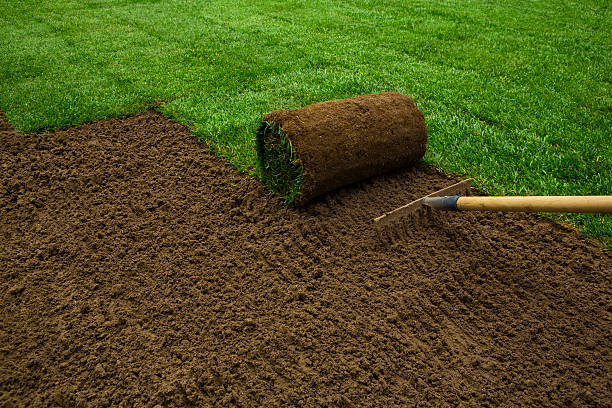
A small yard can be suitable for sod installation, but the size of the lawn is only one part of the job. We also need a workable route for people, fresh sod, soil and any material being removed. In an enclosed Oakville backyard, a narrow gate, steps or a tight turn can influence the method more than the total square footage.
At Monarch Landscaping, we want to understand those constraints before the work is booked. A good plan identifies how materials will reach the lawn, where they can be placed temporarily and how the household will keep using essential doors and paths. Those practical decisions help a compact lawn renovation run smoothly without treating every small property as the same project.
Walk the entire route from the street
Start where deliveries can reasonably arrive and follow the route to the proposed lawn. Do not stop at the first gate. A wider opening may lead to a tight corner, a low overhang or a set of steps. We need to understand the narrowest and most awkward points along the whole route.
Take photos facing both directions. A route that looks open from the driveway may reveal a raised threshold when viewed from the backyard. Include nearby doors, air-conditioning equipment, downspouts and planting beds, because these can affect movement even when they are not directly on the path.
Tell us if the route crosses a shared space or depends on access through another property. Permission and scheduling should be resolved before we rely on that route. We would not assume that a neighbour’s driveway is available simply because it would make the work easier.
Measure openings without assuming equipment will fit
Record the clear gate opening, not just the width of the gate panel. Posts, hinges and the way the gate opens can reduce usable space. If a removable section is being considered, discuss who will remove and reinstate it and whether that work belongs in the estimate.
We do not ask homeowners to select machinery based on an online width specification. The working route also needs turning space, suitable ground support and clearance for safe operation. An opening measurement is useful information, but the installer should decide which method fits the actual site.
Show steps and changes in level
A short flight of steps can change how soil and turf are handled. Note where the steps begin, whether there is a landing and what surfaces surround them. A very small rear lawn may still involve substantial manual movement if the access route is interrupted.
There is no reliable rule that a small yard must be finished in a fixed number of hours. Preparation, access and weather affect the programme. We would explain the expected sequence after reviewing the property rather than promise a timetable based only on lawn area.
Plan where materials will wait
Fresh sod, soil and removed material need coordinated handling. If the only hard surface is a small driveway, a car may need to be parked elsewhere while work proceeds. Identify a possible staging area and tell us about parking restrictions or access that must remain available.
Materials should not block an entrance, a public route or a neighbour’s space. We also want to avoid placing a load where it could damage a surface or obstruct drainage. The appropriate protection and positioning depend on the material, the surface and the way it will be moved.
Fresh sod should be coordinated with a ready installation area rather than delivered casually while other work is still unresolved. Let us arrange the sequence with the supplier and site conditions in mind. A compact yard has little spare room for unnecessary handling.
Connect the access plan to the preparation scope
Some small lawns need modest preparation; others have significant weeds, unsuitable soil or uneven levels. Limited access does not remove those needs. It changes how we can carry out the work and how we explain the alternatives.
Our Oakville sod installation service provides a starting point for discussing lawn replacement. During assessment, we would connect the chosen preparation to the ground conditions and the available route. If material must be removed, the plan should describe where it goes and how it leaves the yard.
Avoid choosing a lighter scope solely because it is easier to bring materials through the gate. If the underlying problem remains, the new turf may face the same limitation as the old lawn. A sensible estimate should make the preparation and access assumptions visible.
Check finished levels near hard surfaces
Small spaces often have several fixed edges close together: a patio, a door threshold, a shed base and a path. Adding soil or sod changes the surface height. We need to consider those relationships so the finished lawn fits the existing features.
This is also why a small yard should not automatically be made completely flat. Water still needs an appropriate route. We would assess levels in relation to the property rather than apply a cosmetic levelling approach without considering drainage.
Protect the surfaces along the route
A route may pass over paving, decking or a finished driveway. Identify existing cracks, loose units and vulnerable edges before work starts. Clear photographs help establish the condition and support a practical discussion about protection.
The protection method should suit the surface and expected activity. A thin sheet placed on a path is not automatically adequate for every load, and a protected surface still needs careful use. We would plan the movement rather than assume one covering eliminates all risk.
Move portable furniture, pots and toys before the agreed start time. For fixed items, ask what clearance is required. Removing avoidable obstacles gives the crew more room and makes it easier to keep essential access routes clear throughout the installation.
Keep watering access in the plan
The installation route and the aftercare route are not always the same. Once the lawn is laid, you still need to reach taps, adjust a sprinkler and access bins or storage. Decide how those tasks will happen without repeatedly crossing unrooted turf.
Test the hose length and sprinkler coverage beforehand. A narrow lawn beside a fence can receive uneven coverage if the sprinkler is positioned for a wider open space. Watch the corners and edges rather than assuming the whole yard is moist because the middle looks wet.
Discuss who will perform the checks while you are at work or away. Even a small lawn needs attention during establishment. A compact area may be easier to reach, but that does not make its watering needs disappear.
Prepare a useful site brief
For a small-yard estimate, we would suggest gathering the approximate lawn area, gate measurements, access photos and a note about material staging. Add any planned work, such as a fence repair or patio extension, that could change the route or damage the lawn later.
If another contractor still needs access, coordinate the sequence before scheduling fresh turf. It is usually more practical to finish disruptive work first than to carry heavy materials across a newly installed lawn. The exact order should reflect the actual project.
Our broader sod installation options can help you understand the preparation conversation. For a confined property, the next useful step is to discuss those options alongside the logistics, so the estimate reflects both the lawn and the route to it